00

Dear Founders, Investors, and Friends,
It’s great to have you back for the February 2026 edition of Blockwall Insights. We apologize for the slight delay in getting this to you. The past few weeks have been packed with a full calendar, but we’re glad to finally have it in your hands. Here’s what we’re covering today:
- TradFi’s DeFi Moment: BlackRock, Apollo, and Citadel Go Onchain
- The Rise of Agentic Commerce: When AI Agents Become Economic Actors
- Luxembourg Opens the Door: Crypto Enters Europe's UCITS Framework
- Blockwall Portfolio Update
- Key Events in February
- What We’ve Been Reading (and Listening)
Executive Summary
In February, major financial players surprised with major moves in the decentralized finance space. BlackRock, Apollo, and Citadel all partnered up with onchain protocols and even invested in their governance tokens, signaling that the world's largest asset allocators increasingly view decentralized infrastructure as the next layer of financial markets.
Meanwhile, “agentic commerce” gained serious momentum. Stripe, Circle, Mastercard, and Santander all made moves to build infrastructure for a future in which AI agents transact and participate in the economy autonomously. The numbers are still small, but the convergence of AI and crypto rails is shaping up to be one of the most consequential verticals of the next decade.
On the regulatory front, Luxembourg's CSSF delivered a landmark update by allowing UCITS investment funds to allocate up to 10% to crypto assets. Given that Luxembourg administers roughly €5 trillion in UCITS assets and serves as the gateway for fund distribution across 30+ European countries, this is another major step toward crypto becoming part of the institutional investment toolkit across Europe.
At Blockwall, we see these developments as a powerful confirmation of our core thesis: the convergence of traditional finance, decentralized infrastructure, and emerging technologies like AI is already well underway.
TradFi’s DeFi Moment: BlackRock, Apollo, and Citadel Go Onchain
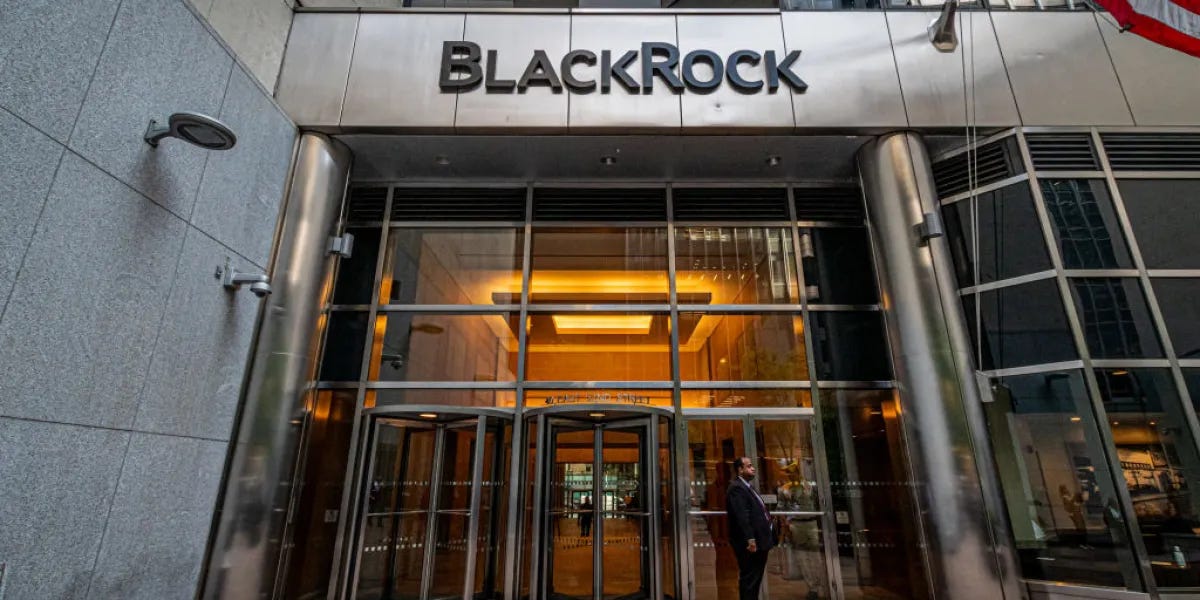
In February, several of the world's leading financial institutions took a decisive step closer to DeFi by deploying real capital into real onchain protocols.
First, BlackRock listed BUIDL, its tokenized money market fund, on Uniswap. This marks the first time the instrument is tradable on a decentralized exchange. While trading is still limited to qualified purchasers with $5 million or more in investable assets, BUIDL’s infrastructure provider Securitize hinted that retail access may follow.
So for now, think of it as a “stress test”: real institutional capital flowing through DeFi rails, testing 24/7 settlement between stablecoins and yield-bearing traditional assets. And if history is any indication, BlackRock's entry might mark the moment others will feel comfortable following.
Another interesting detail to the announcement was BlackRock's disclosure that it has purchased an undisclosed amount of Uniswap's governance token UNI, which can be seen as a direct bet on the protocol itself.
BlackRock wasn’t the only one investing into DeFi. A few days later, $900 billion asset manager Apollo announced an agreement to purchase 90 million MORPHO tokens — the native token of leading lending platform Morpho — over the next four years. The purchase represents roughly 9% of the token's total supply. Beyond the token acquisition, Apollo and Morpho said they will collaborate on lending markets built on Morpho's protocol. In practice, this means Apollo may soon develop its own onchain investment products using Morpho's infrastructure, following the path of crypto-native asset manager Bitwise.
And there was more. Alongside the announcement of its own blockchain network, leading cross-chain protocol LayerZero revealed strategic partnerships with the likes of DTCC, Citadel, and ARK Invest. As part of the collaboration, both Citadel and ARK disclosed investments into LayerZero's ZRO token.
Now, what’s really interesting about these headlines is the choice of tokens. While for LayerZero, it remains unclear whether value generated by the underlying infrastructure will ultimately accrue to the token holder or to the equity holders of the developing entity, both Uniswap and Morpho are committed to flowing all protocol value to their respective tokens. This is a significant distinction.
What we're seeing, in essence, is tokens becoming equity-like instruments. And going forward, the protocols that clearly define how value accrues to the token, rather than leaving it ambiguous, are likely to attract the most institutional attention. That dynamic could reshape how the entire market thinks about token valuation.
The Rise of Agentic Commerce: When AI Agents Become Economic Actors

Another topic that dominated headlines in recent weeks was agentic commerce. And for good reason.
In essence, the term describes a future in which AI agents become full economic actors with the ability to buy goods and services. In this model, agents execute transactions on behalf of users, whether that’s paying for food delivery or managing subscriptions. In more advanced scenarios, they operate fully autonomously, initiating and completing transactions without any human involvement.
And in the last weeks, major announcements around this sector came in quick succession:
- Stripe devoted an entire section in its annual letter to the emerging vertical, framing it as a generational shift comparable to the early days of the internet and committing to further develop its existing product suite to support agent-driven commerce.
- Circle, in its recent earnings call, identified finance around AI agents as a major catalyst for the company's growth.
- And on the more traditional side, Santander and Mastercard completed Europe's first live end-to-end payment executed by an AI agent.
The trend is clear: both traditional and crypto-native players are building the infrastructure that allows AI agents to transact, make payments, and participate directly in the digital economy.
Given the scale of the opportunity, these moves shouldn't come as a surprise. According to McKinsey, AI agents could mediate $3 to $5 trillion in global retail commerce by 2030. That would represent a majority of today's global e-commerce market, which stands at around $6.4 trillion.
But, looking at the current numbers, the vertical is still firmly in experimentation mode. Since October last year, x402, the leading payments protocol for agents developed by Coinbase, has processed transactions worth roughly $14.5 million. The dominant use cases so far involve agents paying for digital resources such as API access, data feeds, compute, and AI-generated content.
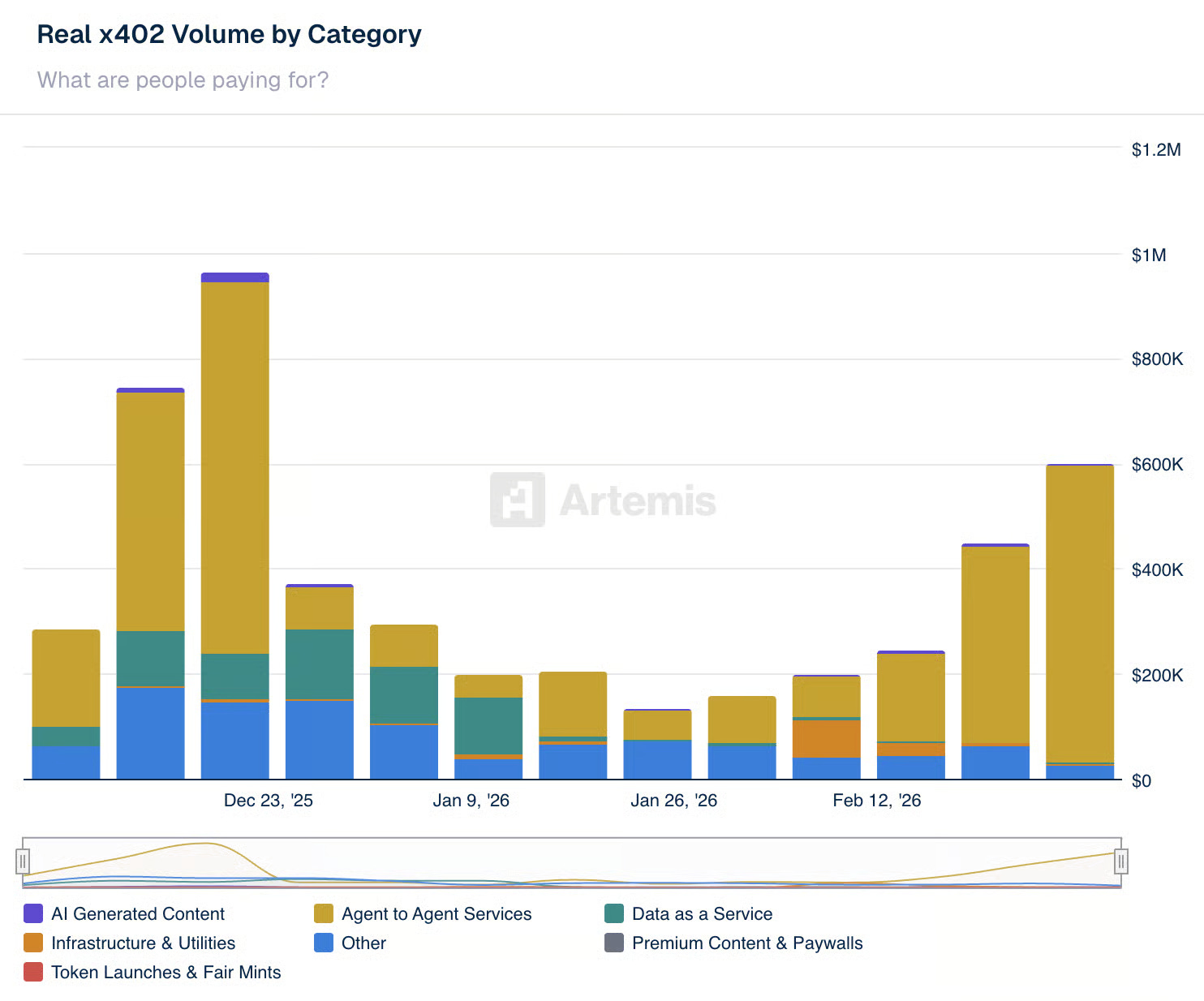
Still, the kinds of innovation this is likely to unlock further down the road can already be seen today. Take Felix, an autonomous agent that generated roughly $70,000 in 30 days by building and selling digital products. Or Kelly Claude, an agent that develops iOS apps end-to-end, from ideation to App Store submission. What we’re witnessing is the early emergence of an economy by AI agents, for AI agents.
We at Blockwall are very excited about this vertical. It is the perfect encapsulation of our thesis around the convergence of technologies, where crypto infrastructure provides the financial rails and AI provides the intelligence. We'll continue to keep a close eye on this space.
Luxembourg Opens the Door: Crypto Enters Europe’s UCITS Framework
Before we share our portfolio update, let’s highlight a major regulatory development that carries significant weight for crypto as an asset class.
In early February, Luxembourg’s financial regulator CSSF published a landmark update to its rules on crypto-assets for investment funds. For the first time since banning crypto exposure in 2018, the CSSF now allows UCITS, Europe’s most widely used retail fund structure, to allocate up to 10% of their portfolio to crypto-assets. The exposure must come through eligible securities, such as Exchange-Traded Products (ETPs).
To appreciate the significance of this move, consider the facts:
- Luxembourg is the largest fund domicile in Europe, administering roughly €5 trillion in UCITS assets out of approximately €34 trillion across the continent.
- A fund approved in Luxembourg can be distributed to retail investors in more than 30 countries through a single passport.
- Thus, when the CSSF revises the rules for UCITS, it tends to shape the direction of the broader European market.
This matters for several reasons. First, multi-asset funds can now include a crypto allocation within their existing mandates without needing separate vehicles. Second, the implications for retail access are substantial. Once crypto exposure sits inside a UCITS wrapper, retail clients can gain access to crypto through the same banking interface they already use for savings and investments. That’s a fundamentally different distribution channel than standalone crypto products.
The provision also allows regulated stablecoins to be used for processing fund subscriptions and redemptions. This removes a key friction point and opens the door for fund servicing infrastructure to become more digital.
Overall, this is a major development for our industry, one that pushes crypto further into the universe of investable assets.
Blockwall Portfolio Update
In February, our portfolio company Spiko crossed $1 billion in assets under management across its tokenized money market funds.
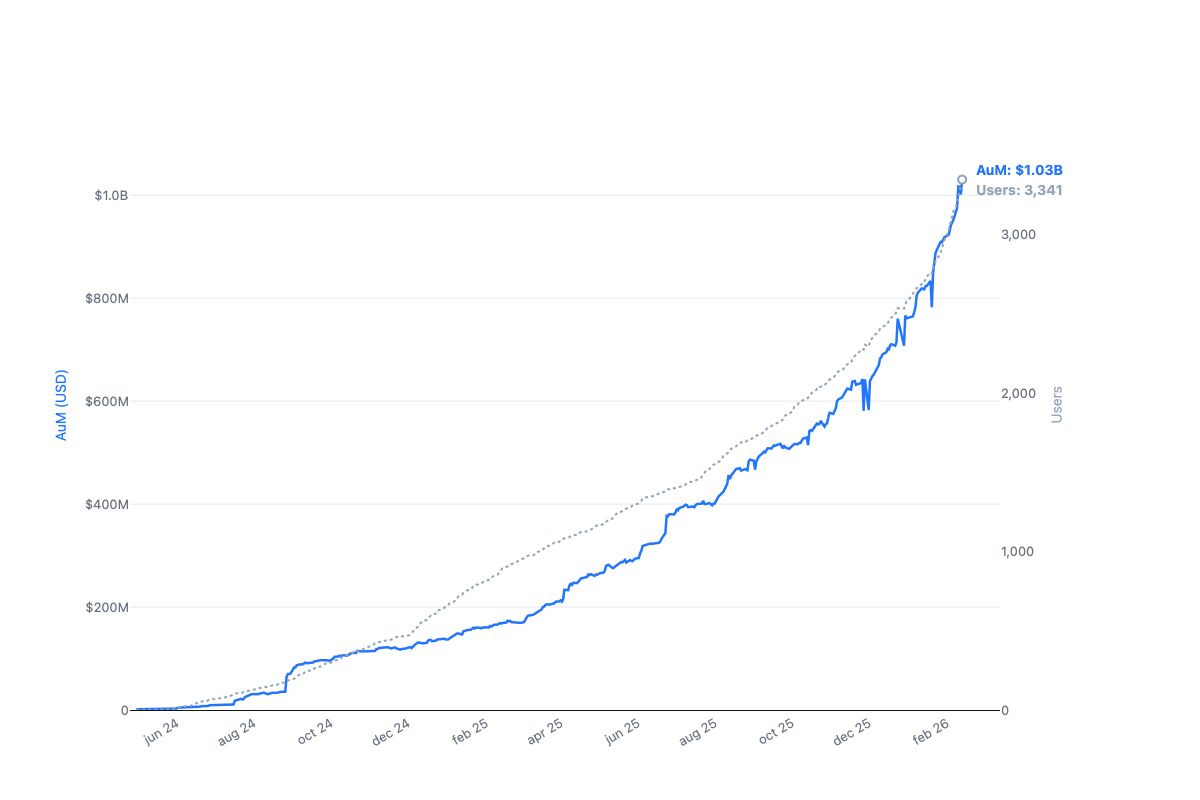
With that milestone, Spiko now trails only BlackRock’s BUIDL (roughly $2 billion) and Circle’s USYC (around $2.1 billion) in the tokenized MMF space, ahead of established players like Franklin Templeton (roughly $600 million).
This also makes Spiko the only European issuer in this group and the fastest-growing among them. Today, Spiko serves over 3,600 active clients across more than 20 countries, with both AuM and user numbers growing over 15% month over month.
With this momentum, we can’t wait to see what Paul-Adrien, Antoine, and the team will achieve in the months and years ahead.
For more figures on Spiko’s recent growth, please see this blog post.
Key Events in February
- ICE integrates Polymarket data. The New York Stock Exchange (NYSE) operator now provides institutional clients with prediction market data and analytics. The integration follows ICE’s $2 billion investment in Polymarket in October last year. (Source: BusinessWire)
- ICE expands crypto push with investment in OKX. In another move, the exchange operator invested in crypto exchange OKX at a $25 billion valuation. As part of the agreement, OKX will provide ICE with real-time crypto price feeds for U.S.-regulated crypto futures. The partnership also gives ICE access to OKX’s roughly 120 million global users and lays the groundwork for future products, including tokenized NYSE equities, with launches targeted for 2026. (Source: ICE)
- Boerse Stuttgart Digital and tradias announce merger. The combination consolidates two of Germany’s most prominent digital asset infrastructure providers under one roof. (Source: Bloomberg)
- Y Combinator adds stablecoin-based funding. Startups accepted into the prominent U.S. incubator can now choose to receive their $500,000 funding in stablecoins. (Source: Y Combinator)
- Meta explores stablecoin comeback. The tech giant is evaluating how to integrate stablecoin payments across its family of apps and has issued a request for proposals to third-party firms, with Stripe cited by CoinDesk as a leading pilot partner. (Source: CoinDesk)
What We’ve Been Reading (and Listening)
- Digital Transformation & Next-Gen Technology Study 2026 (Broadridge) — A study examining how financial institutions are accelerating digital transformation through AI, tokenization, and modern infrastructure. For the core insights, see Dominic’s LinkedIn post.
- Quantum Computing: How Safe Is Your Bitcoin? (Unchained) — A podcast with a Bitcoin core developer exploring how the development community thinks about and actively works on solving the quantum threat. For the core insights, see Dominic’s LinkedIn post.
Disclaimer
To avoid any misinterpretation, nothing in this blog should be considered as an offer to sell or a solicitation of interest to purchase any securities advised by Blockwall, its affiliates or its representatives. Under no circumstances should anything herein be interpreted as fund marketing materials for prospective investors considering an investment in any Blockwall fund. None of the data and information constitutes general or personalized investment advice and only represents the personal opinion of the author. The author and/or Blockwall may directly or indirectly be exposed to the mentioned assets/investments. For further information please view the full Disclaimer by clicking the button below.
This work is licensed under the Creative Commons Attribution – No Derivatives 4.0 International License. CC BY-ND 4.0 Legal Code | Creative Commons