00
What Happens After the Money Arrives? Why We Invested in Seva Money

Vikram lives in Edinburgh. Back home in India, his father gets a blood test every month. What he likes about his new Seva card is that his father can get those same tests at a much lower price. His father is also looking forward to earning cashback on other medical expenses. Ritu Soni founded Seva for families like Vikram’s. Living away from her own family, she knew how much easier it was to send money for care than to arrange that care from abroad.
For many people in diaspora communities, sending money to the same relative back home is a monthly routine. For money transfer operators (MTOs) like Western Union, the transaction usually ends when the recipient collects the cash or the money reaches their account. Ritu sees an opportunity for operators to serve those families between transfers, and we share her view. In India, an operator can use Seva to offer specialist consultations, eye and dental checks, and a daily cash benefit during a covered hospital stay. The operator offers the plan under its own brand and shares the subscription revenue with Seva.
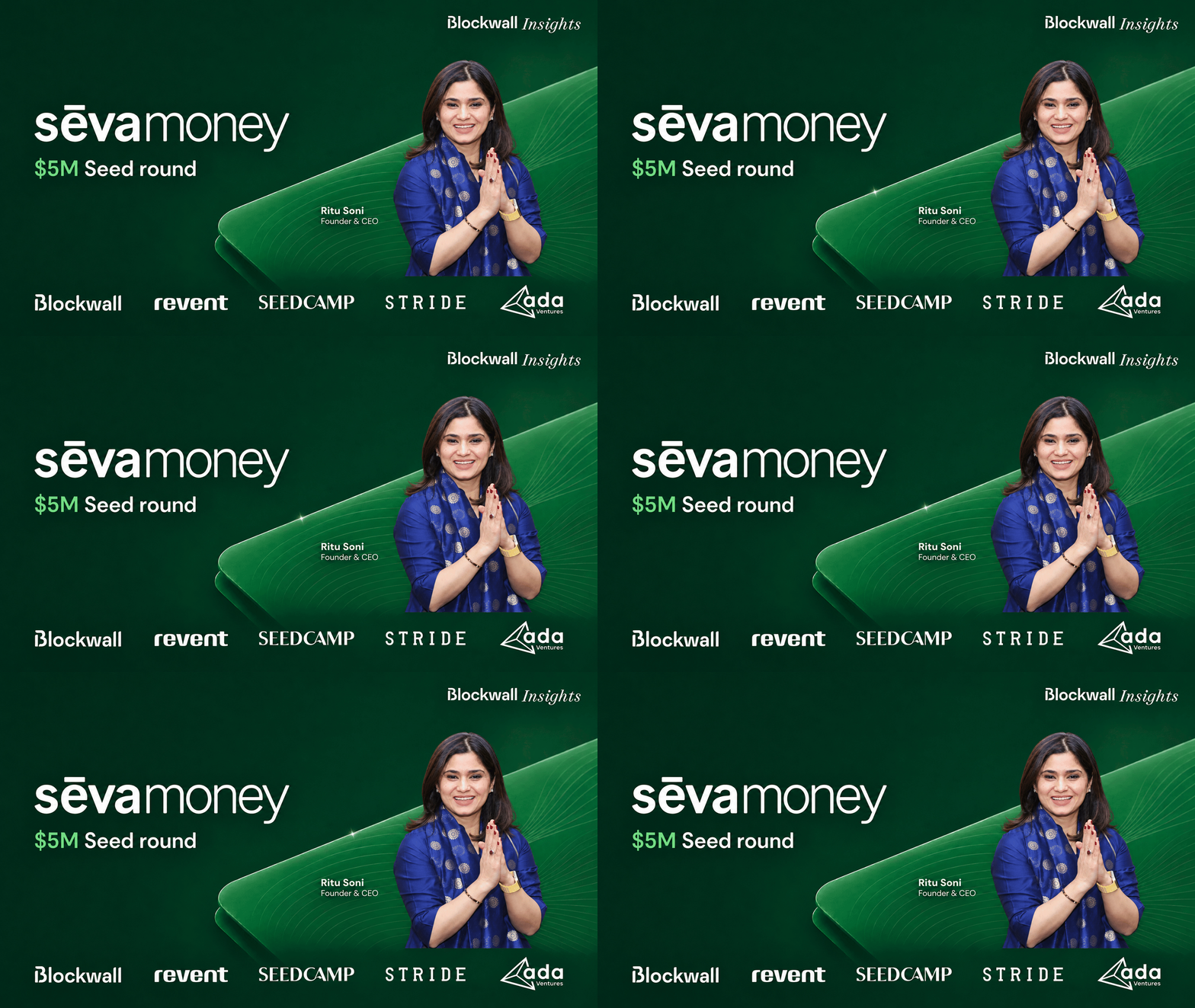
Blockwall and Revent co-led Seva Money’s $5 million seed round, with existing investors Seedcamp, Stride and Ada Ventures participating. MTOs already have the customers Seva wants to reach. Seva brings the issuing and healthcare partnerships those operators would otherwise have to build for themselves. We believe the savings families see on routine care and the protection they get against larger bills give them a reason to renew.
What the Sender Is Buying
At WorldRemit, part of Ritu’s job was to give senders a reason to come back for their next transfer. In a race to the bottom on price, even a long-standing customer might switch for a difference of half a percentage point. Her team asked 48,000 senders what else they wanted to do for their families back home. Healthcare, insurance and savings kept coming up. Ritu tried to build a way for senders to arrange those services through a transfer operator. The platform she needed did not exist, so she founded Seva to build it.
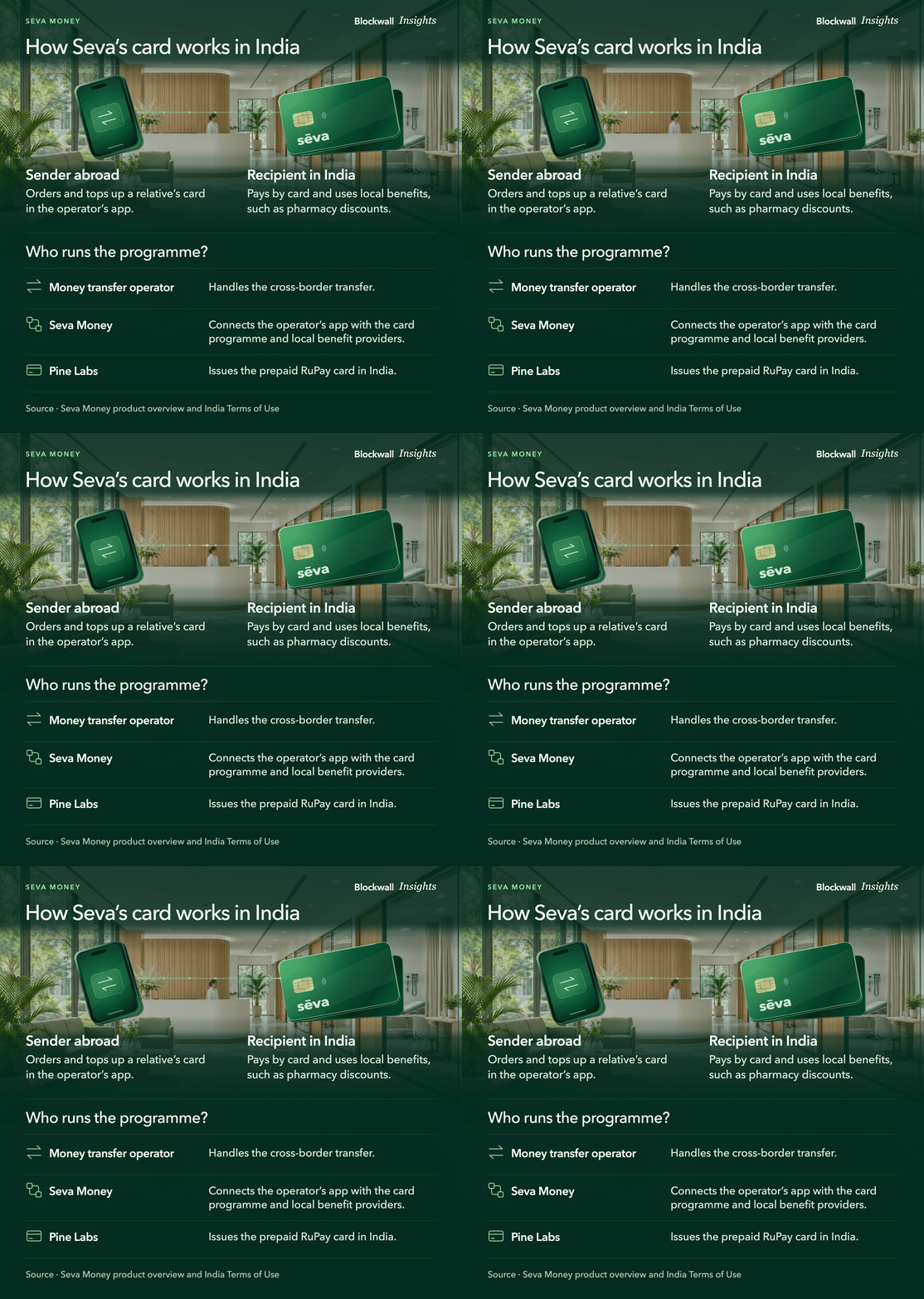
Seva’s white-label wallet and prepaid card infrastructure is designed for MTOs such as Western Union, MoneyGram and Remitly. A sender in the UK can order and fund a prepaid card for a parent in India, who can spend the balance in rupees. The sender pays a monthly subscription that gives the parent access to discounted diagnostic tests and a fixed cash benefit for covered hospital stays.
By pooling demand across several transfer operators, Seva can negotiate group terms with labs and insurers that an individual family would have little bargaining power to secure.
Why an Operator Would Buy It
When MTOs add financial products for senders, they compete with banks and fintechs in the country where those customers live. Through the sender they already serve, they can also offer a service to the family receiving the money. After a qualifying transfer with DeeMoney, for example, senders can activate a free month of Seva care services for their families in India. If the family uses that service between transfers, we think the sender has another reason to choose the same operator next time.
For the operator, this is a build vs. buy decision. Building the program in-house means integrating with a local card issuer, onboarding recipients and maintaining relationships with healthcare providers and insurers in each destination market. In markets where Seva already operates, another operator can use the issuing and healthcare partnerships Seva has put in place. In India, Pine Labs issues the prepaid card on RuPay. Seva’s broader platform supports both fiat and stablecoin payments. With Seva’s help, each operator can integrate the program into its existing service, offer it under its own brand and keep its direct relationship with senders.
Our Conviction
We see room for Seva to grow with an operator long after the first contract is signed. Seva already offers services for recipients in India and Mexico. An operator serving both markets can start in one and use the same integration to launch in the other. That second launch gives Seva a way to reach more families through a customer it has already won.
As families begin using the program, the relationship becomes harder to replace. An operator changing providers would need to make sure families can still access their card balances and rely on the insurance coverage they have paid for.
What Ritu tried to build at WorldRemit would have served one operator’s customers. We backed her because the operators competing for a sender’s next transfer can all use Seva to serve the family receiving it.
Learn more about Seva Money at seva.money.
Follow Seva Money on LinkedIn.
Disclaimer
To avoid any misinterpretation, nothing in this blog should be considered as an offer to sell or a solicitation of interest to purchase any securities advised by Blockwall, its affiliates or its representatives. Under no circumstances should anything herein be interpreted as fund marketing materials for prospective investors considering an investment in any Blockwall fund. None of the data and information constitutes general or personalized investment advice and only represents the personal opinion of the author. The author and/or Blockwall may directly or indirectly be exposed to the mentioned assets/investments. For further information please view the full Disclaimer by clicking the button below.
This work is licensed under the Creative Commons Attribution – No Derivatives 4.0 International License. CC BY-ND 4.0 Legal Code | Creative Commons